
FAST Project Conclude a Successful Training of Trainers on Sustainable Cocoa Cultivation and Processing
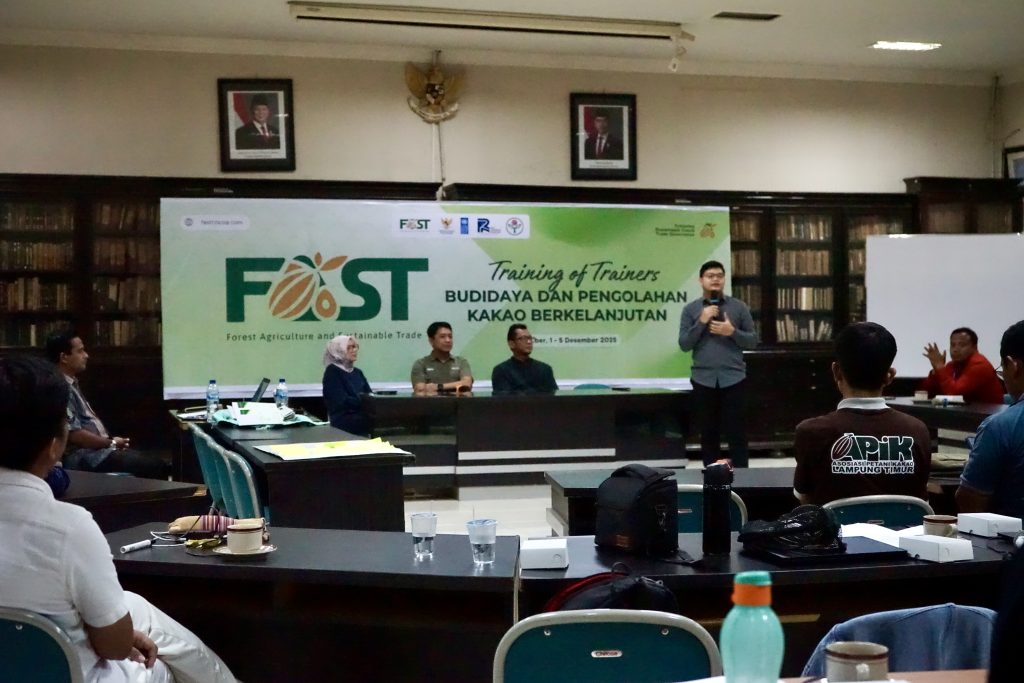
Jember, 5 December 2025 – Marking another step forward in strengthening sustainable cocoa production in Indonesia, the United Nations Development Programme (UNDP) through FAST Project in collaboration with the Indonesia Coffee and Cocoa Research Intitute (ICCRI) successfully wrapped up the five-day Training of Trainers (ToT) on Sustainable Practices for Cocoa Cultivation and Processing. Held from December 1 – 5, 2025, at the ICCRI Training Centre in Kaliwining, Jember, the training has brought together representatives from key cocoa-growing regions, including Lampung, Central Sulawesi, East Kalimantan, and East Java.
The success of this training is made possible through the collaboration between the FAST Project and the Indonesian Coffee and Cocoa Research Institute (ICCRI), facilitated by UNDP Indonesia with funding support from the UK Foreign, Commonwealth & Development Office (FCDO). FAST Project aims to equips farmers with the knowledge and skills needed to advance sustainable, productive, and resilient cocoa farming practices.
As one of the FAST Project’s flagship capacity-building initiatives, Training of Trainers met a strong enthusiasm from participants, many of them viewed the training as a significant step toward strengthening the cocoa value chain in their respective regions.
Young cocoa farmer Julsa Arofian (33), from Asosiasi Petani Kakao Lampung Timur (APIK), shared his reflections on the learning experience,
“Throughout this training, I learned so many new things, pruning, pest control, and new knowledge about cocoa that I had never knew before. Everything from cultivation to post-harvest was explained in such a complete and practical way. It was truly remarkable.” he said.
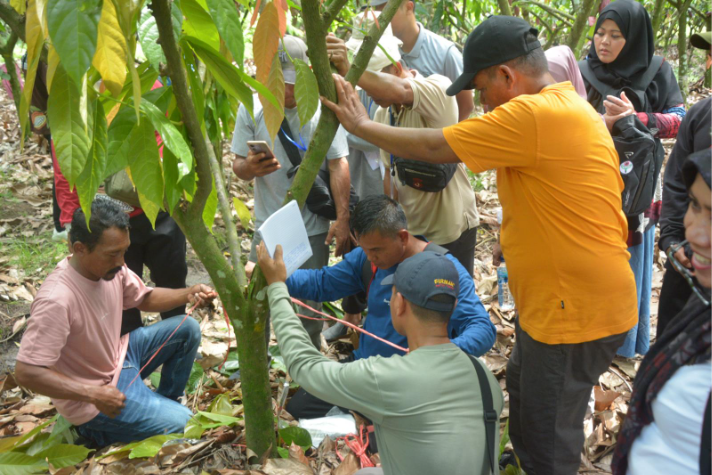
Across the five-days, guided by ICCRI Training Centre’s ISO 9001:2015, participants followed a structured learning journey that combined technical insight with hands-on practice. The 1st day introduced Indonesia’s cocoa landscape, outlining its market potential, current challenges, and opportunities for strengthening the sector. On the 2nd and 3rd days, the focus shifted to practical implementation of Good Agricultural Practices (GAP) and Good Handling Practices (GHP), covering pest and disease management, rehabilitation techniques, fermentation, drying, and basic quality testing. Participants also visited ICCRI’s chocolate processing facility, where they learned how cocoa beans can also be transformed into higher-value chocolate products at a household scale, supporting inclusivity and empowering both men and women as key agents of change within cocoa-farming communities.
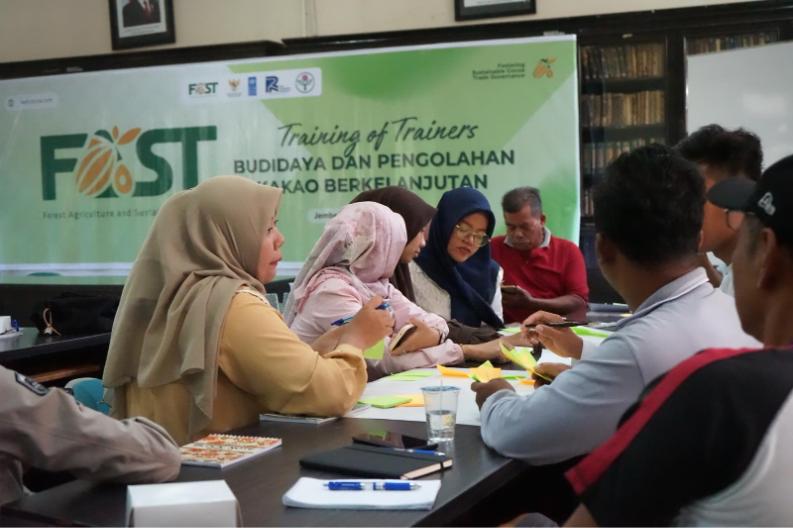
The 4th day emphasized farmers community-level skills, including from strengthening farmer groups to practical facilitation methods that help build a more resilient, self-reliant, and sustainable farming community supported by stronger financial literacy and broader knowledge adoption. It also featured a regional forum group discussion (FGD) where participants identified key cultivation challenges and discussed practical solutions. The participants also completed post-test to evaluate learning outcomes and assess competency gains. The final day wrapped up with a visit to Cokelat Mojopahit in Mojokerto, featuring insights from Mulyono, S.H., a successful cocoa farmer and processor who has built a thriving community-based enterprise.
As the training comes to an end, ICCRI, UNDP, and the Coordinating Ministry of Economic Affairs reaffirm their shared commitment to empowering farmers and strengthening the national cocoa value chain. Abi Ismarrahman, Sustainable Commodities Adviser, Environment and Sustainable Commodities Team, Low Carbon Development Group of Foreign, Commonwealth and Development Office (UK FCDO), added on his closing statement,
“Indonesian government has developed important strategy and policy about the comodity cultivation, and of them is cacao, to foster the sustainalibility. As a part of UK FCDO commitment, we work together with the producent country, one of them is Indonesia, to strengthen sustainable comodity management by improving governance, transparency, and accountability in supply chains, while promoting deforestation-free value chain.”
Building on this shared vision, the Indonesia Government continues to accelerate efforts to enhance farmer capacity and support the long-term growth of the cocoa sector. Syauqi Ahmada, representative of the Coordinating Ministry for Economic Affairs, emphasized this commitment in his speech, noting that,
“The Government of Indonesia remains committed to strengthening farmer capacity and boosting the productivity and sustainability of national commodities. With Presidential Regulation No. 132 of 2024, the BPDP mandate now includes cocoa, opening new opportunities for structured support in financing, skills development, research, and downstream growth.”
“This expansion provides greater momentum for the cocoa sector. The Government values continued collaboration with development partners, including through UNDP’s FAST programme, and believes that these joint efforts will enhance the productivity, quality, and global competitiveness of Indonesian cocoa.” added Syauqi Ahmada.
The completion of this programme marks an important step in supporting Indonesia’s cocoa farmers as they navigate evolving challenges in the sector. By strengthening local capacities and promoting sustainable, science-based practices, the Training of Trainers programme also reinforces Indonesia’s progress toward the Sustainable Development Goals through a multidimensional integration of economic, social, and environmental priorities.

UNDP and ICCRI look forward to continued collaboration to drive lasting improvements and support the growth of Indonesia’s cocoa industry. In his closing remarks, Wahya Biyantara of UNDP Indonesia highlighted the importance of strong partnerships in ensuring that research and good practices can meaningfully support farmers on the ground. Dini Astika Sari, Head of ICCRI, echoed this commitment, noting that sustained capacity building and sustainable practices are key to strengthening the competitiveness of Indonesian cocoa. Both institutions reaffirm their dedication to working together to advance a more productive, resilient, and sustainable cocoa sector.
As of Nur Zevvry (29), Pacitan, one of the local community farmers from Kelompok Tani Desa Gawang, Kabupaten Pacitan, shared,
“This training made a real difference for us. It opened our eyes to better ways of working, helped us learn directly from the field, and strengthened the connection between young and senior farmers in our area. Our hope is that, hand in hand, we can uplift Indonesia’s cocoa sector, driven by a shared commitment to knowledge, sustainability, and community empowerment.” agreeing on the importance of collaboration among farmers, institutions, and developing partners.
For the farmers, the closing of this training is not an end, but the beginning of a new journey. The trainers who completed this programme now stand ready to bring sustainable, science based, and community-driven cocoa practices to their respective regions, contributing to a cocoa sector that is more resilient, inclusive, and competitive for generations to come.


